

You must position porta potties at least 50-100 feet from residential structures near Fresno, with a mandatory 10-foot setback from property lines under Title 15 of the Fresno Municipal Code. You’ll need to maintain 100-foot clearance from wells and septic systems, factor in prevailing wind direction for odor control, and obtain permits through the Building and Safety Division before installation. Non-compliance can result in fines of up to $1,000 per violation, and you’ll uncover additional placement factors that ensure regulatory compliance.
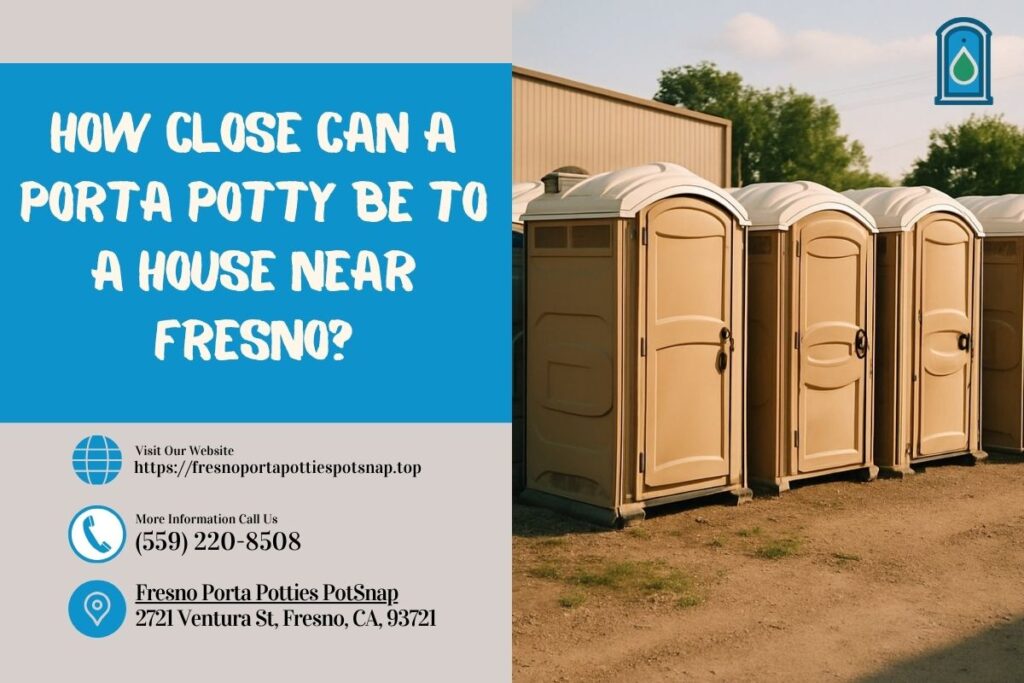
Local building codes and health regulations in Fresno County typically require portable sanitation units to be positioned at least 50-100 feet from residential structures.
You’ll need to verify specific distance requirements with your local planning department, as regulations vary by zone designation. Standard placement protocols mandate adequate clearance from property lines, wells, and septic systems—typically maintaining 100 feet from water sources.
You’re free to adjust positioning within compliant parameters based on accessibility needs and usage patterns.
Consider factors such as delivery truck access, ground stability, and user convenience when determining the exact placement. Wind direction affects odor dispersion, so strategic positioning downwind from occupied structures optimizes comfort.
Documenting compliant placement protects you from potential citations and ensures your rental meets all regulatory standards.
See also: Fresno portable toilet rental
Beyond minimum distance requirements, residential porta potty placement demands attention to multiple regulatory and practical considerations.
You’ll need to navigate local zoning ordinances, homeowner association rules, and Fresno County health codes that govern temporary sanitation facilities. Your placement must guarantee accessibility while respecting property boundaries and neighbor relations.
Consider these crucial compliance factors:
You’re responsible for verifying permit requirements with Fresno County’s planning department before installation.
Non-compliance can result in citations, removal orders, or fines. Fresno Porta Potties PotSnap helps you navigate these regulations while protecting your property rights.
When installing porta potties near residential properties in Fresno, you must comply with Title 15 of the Fresno Municipal Code, which governs temporary sanitation facilities within city limits.
You’ll need proper setbacks from property lines—typically 10 feet minimum from adjacent residences. The code requires adequate ventilation, daily servicing for units exceeding 30-day placement, and proper waste containment systems.
You’re responsible for obtaining permits through the Building and Safety Division before installation. Special-use permits may be required for extended rentals in residential zones.
The city enforces strict drainage requirements to prevent groundwater contamination. You’ll face penalties for non-compliance, including fines up to $1,000 per violation.
Fresno Porta Potties PotSnap handles all permit documentation and ensures your installation meets all regulatory standards efficiently.
Several critical variables determine the minimum safe distance for porta potty placement near residential structures.
You’ll need to evaluate property-specific conditions that directly impact your placement decisions:
Your site’s soil composition matters for stability and potential environmental impact.
Setback requirements from wells, septic systems, and water lines typically mandate 50-100 feet of clearance.
Property line boundaries limit placement options, while easements and utility corridors impose additional constraints.
Local health codes often specify ventilation zones and buffer distances.
You’re responsible for verifying these measurements meet Fresno County’s specific standards before installation.
Understanding prevailing wind patterns at your Fresno property directly determines compliant porta potty positioning for odor mitigation. You’ll need to position units downwind from occupied structures to maintain regulatory standards while preserving your operational flexibility.
| Wind Factor | Placement Requirement |
|---|---|
| Prevailing Direction | Minimum 50 feet downwind from dwelling |
| Variable Patterns | 75-100 feet multi-directional buffer |
| Seasonal Shifts | Quarterly reassessment protocols |
| Peak Usage Periods | Improved ventilation positioning |
Document wind assessments for permit compliance. You’re free to adjust placement within the code parameters—strategic positioning protects your neighbors’ comfort without restricting your site’s use. Install units perpendicular to dominant wind flows when possible. Fresno’s summer heat intensifies odor dispersion, requiring expanded setback distances during June through September.
Before finalizing porta potty placement, you must verify that service vehicles can execute required maintenance operations within Fresno’s municipal access codes.
Your placement strategy needs adequate clearance for pumper trucks, which typically require 12-foot width corridors and 14-foot overhead clearance. You’ll maintain compliance by confirming vehicle turning radiuses match your property’s access routes.
Consider these crucial clearance requirements:
You’re responsible for maintaining these access standards throughout your rental period.
Fresno Porta Potties: PotSnap’s service technicians can’t perform maintenance if your placement violates these specifications, which could trigger sanitation compliance issues.
When positioning your porta potty near residential structures, you’ll optimize functionality by selecting locations that balance accessibility requirements with setback regulations.
| Location Type | Setback Distance | Key Considerations |
|---|---|---|
| Driveway Edge | 10-15 feet | Service vehicle access, concrete stability |
| Side Yard | 5-10 feet | Property line clearances, gate width |
| Backyard Corner | 3-5 feet | Privacy screening, ground levelness |
| Front Yard | 15-20 feet | Municipal code compliance, visibility |
| Near Garage | 8-12 feet | Door clearance, ventilation factors |
You’ll want level ground with adequate drainage to prevent tipping hazards. Confirm your chosen spot allows unobstructed service truck access—typically requiring 10-12 feet clearance width. Consider prevailing wind direction to minimize odor impact on living spaces. Verify underground utility locations before placement to avoid costly damage.
Driveways provide structurally superior placement for porta potties due to their load-bearing concrete or asphalt surfaces, which prevent unit settling and facilitate compliant service access.
You’ll maintain full property access while meeting setback requirements without permit complications.
Backyard placement offers strategic advantages when driveways aren’t viable:
Position units where service vehicles can complete pump-outs within regulatory timeframes.
Verify underground utility clearances before placement.
You’re responsible for confirming local zoning compliance, though Fresno Porta Potties PotSnap assists with standard residential configurations.
Strategic placement directly impacts guest willingness to use your rental unit. You’ll need to position the porta potty where it provides adequate screening from direct sightlines while maintaining accessible pathways.
Local Fresno ordinances require minimum setbacks from property lines, typically 5-10 feet, which naturally creates privacy buffers.
You’re legally required to guarantee ADA-compliant access routes where applicable, but you can strategically use existing landscaping, fencing, or temporary barriers to improve privacy without violating clearance requirements.
Position units away from main gathering areas while keeping walking distances under 200 feet—the industry standard maximum.
Consider the prevailing wind direction to prevent odor from migrating toward your house or entertainment spaces.
You’ll maintain both regulatory compliance and guest comfort by balancing accessibility requirements with discrete positioning that respects personal dignity.
Before positioning your porta potty, you must verify ground stability to prevent tipping hazards—units weigh 200-250 pounds when empty and over 500 pounds when serviced.
You’ll need level terrain that supports concentrated weight distribution without soil subsidence.
Critical safety zones you’re required to maintain:
You’re also responsible for ensuring ADA compliance when applicable—accessible units require 60-inch maneuvering clearance.
Fresno Porta Potties PotSnap handles placement assessment during delivery, but final site approval remains your responsibility.
Proper positioning prevents liability issues while maintaining regulatory compliance.
Ground protection begins with selecting impermeable surfaces or installing protective barriers beneath your porta potty unit.
You’ll want non-porous materials like concrete, asphalt, or heavy-duty ground tarps to prevent infiltration of water into soil and groundwater systems.
Position your unit on level terrain to minimize spill risks during servicing.
You’re required to maintain at least a 100-foot setback from water wells and natural drainage channels per California health codes.
Install additional containment systems if you’re placing units on permeable surfaces for extended periods.
Regular inspections catch tank integrity issues before contamination occurs.
You’ll need immediate spill response protocols, including absorbent materials and proper waste disposal channels.
Document all maintenance activities to demonstrate compliance with environmental protection standards and preserve your operational freedom.
Proper ventilation systems protect occupant health while structural stability prevents hazardous tipping incidents at your rental site.
You’ll need adequate airflow through roof vents to eliminate harmful gases and maintain breathable conditions. Your unit must rest on firm, level ground with sufficient base support to prevent tilting during use.
Critical placement requirements include:
You’re responsible for verifying ground conditions before installation.
Contact Fresno Porta Potties PotSnap to confirm that your placement meets ventilation and stability standards without unnecessary restrictions on your property.
Planning your residential porta potty installation requires adherence to multiple regulatory parameters that’ll guarantee code compliance and neighbor relations. You’ll need to coordinate with local authorities while ensuring compliance with property boundaries and access requirements.
| Setup Component | Minimum Standard | Freedom Factor |
|---|---|---|
| Distance Buffer | 50 feet from structures | Prevents disputes |
| Access Width | 10 feet clearance | Enables service mobility |
| Ground Stability | Level, compacted surface | Avoids hazards |
| Drainage Plan | Proper slope/containment | Protects environment |
| Notice Period | 48 hours to neighbors | Maintains goodwill |
You’re responsible for verifying zoning permits, securing adequate anchoring systems, and confirming service vehicle routes. Fresno Porta Potties PotSnap provides compliant units that meet California sanitation codes while respecting your property autonomy. Document all placement decisions to protect yourself from liability claims.
How effectively you communicate specifications to your rental provider directly impacts regulatory compliance and operational success.
You’ll need to provide exact placement coordinates, surface conditions, and access limitations upfront. Clear communication prevents setback violations and guarantees your event or project stays on schedule without regulatory interruptions.
Specify these critical details to your provider:
When you’re transparent about site constraints, Fresno Porta Potties PotSnap can recommend compliant solutions that meet Fresno County requirements while respecting your property boundaries and operational timeline.
Once you’ve established clear communication channels with your provider, coordinate specific delivery and pickup windows that align with permit requirements and site accessibility.
You’ll need to confirm the truck’s clearance specifications—typically 10-12 feet vertical and 12 feet horizontal—to safely maneuver equipment. Document your timeline in writing, noting any jurisdictional restrictions on delivery hours, which are typically 7 AM to 6 PM on weekdays.
Verify ground conditions before scheduled arrival. Soft soil, steep grades, or overhead utilities can delay placement and increase costs.
You’re responsible for marking underground lines through 811 before delivery. Schedule pickups promptly when service ends; extended rentals may trigger supplementary fees or zoning violations.
Plan buffer time for weather delays or equipment availability. Clear documentation protects your operational freedom.
You’ll pay between $75-$200 per day for standard porta potty rentals in Fresno, depending on unit type and rental duration. Prices vary based on delivery distance, service frequency, and whether you meet specific sanitation code requirements for your property.
Yes, you can rent a porta potty for just one day. Fresno Porta Potties PotSnap offers flexible daily rentals that meet all local sanitation codes and permit requirements, giving you the freedom to accommodate your specific event timeline.
If your porta potty tips during use, you’ll face immediate safety hazards and potential code violations. Modern units include stabilization systems and proper placement prevents tipping. You’re responsible for securing adequate anchoring per local Fresno regulations.
No, you don’t need electricity or water hookups. Standard porta potties operate independently using chemical treatments and holding tanks. This self-contained design gives you placement flexibility without utility connection requirements or permit complications.
For extended rentals, you’ll need weekly servicing to meet health code requirements. However, high-traffic events demand more frequent maintenance—every 2-3 days guarantees compliance with sanitation standards while preserving your guests’ comfort and facility functionality.



© 2026 Fresno Porta Potties PotSnap. All Rights Reserved.